
SECONDARY I
Middle school is a time of transformation. Adolescents are eager for independence and purpose, and ready to discover who they are in relation to the wider world. At Mariposa Montessori, we honor this stage by offering a program designed specifically for students ages 12-15, where academic rigor meets real-world experience in a supportive community that allows them to thrive.
As a fully accredited American Montessori Society (AMS) school serving children from infancy through 9th grade, Mariposa provides a seamless, research-based educational journey. Our adolescent program is the culmination of this continuum, offering students meaningful academics, hands-on projects, travel, and stewardship of our nine-acre campus. Here, students gain confidence and agency, practice leadership and collaboration, and make deep connections with peers and guides. They leave not only prepared for high school, but also equipped with the skills, resilience, and self-awareness to thrive in life beyond the classroom.
Pillars of Mariposa’s Secondary I Program
-
Why does a three-year program matter?
Multi-age community (12-15): Students work across grade levels, just as they will later in teams, workplaces, and communities. They learn from older peers and grow into leadership as they become the older students themselves, carrying on the culture created within the classroom.
Well-rounded growth: Three years gives time for students to cycle through discovery and exploration → practice and independence → mastery, leadership, and innovation. Each student leaves with confidence in their voice, their work, and their ability to contribute.
Agency & identity: Adolescents often need continuity and stability to discover who they are. A three-year program gives them space to make mistakes, repair, and grow while feeling rooted in a community.
High school preparation: Students receive high school credits in core areas, setting them up with both readiness and flexibility as they enter their next stage of education.
-
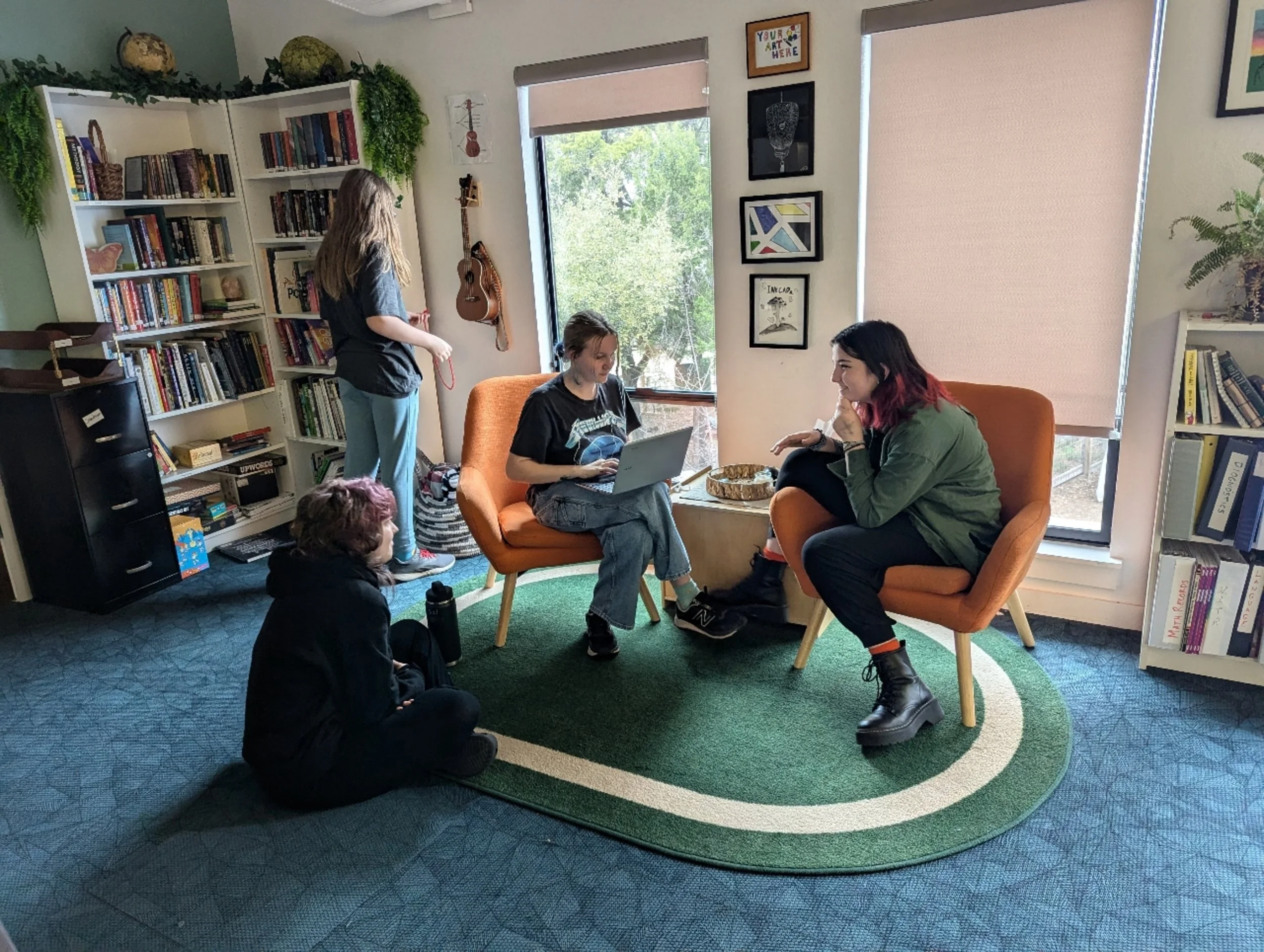
A prepared environment is essential for meaningful learning. In such a space, students can independently locate resources, make connections, and choose flexible seating that supports their needs. Thoughtful design provides areas for collaboration, quiet focused study, accessible outdoor spaces for reflection and stewardship, and shelves that are carefully curated and refreshed with materials that spark curiosity and invite exploration.
In this setting, students discover that education is not something that simply happens to them. The environment itself invites participation, exploration, and contribution. It’s a shared space they help care for and continually shape.
-
The open work cycle is the heart of the Montessori classroom. It is an extended, uninterrupted block of time that allows students to focus deeply, organize their priorities, and make meaningful progress on their work.
During this time, students have the freedom to choose how and where to work, while following a clear academic framework. Study guides and teacher conferences provide structure, ensuring that students balance independence with accountability and stay on track with essential skills and content.
Some students may use this time for solo study, while others collaborate on group projects. In both cases, the open work cycle gives adolescents the time they need to engage fully, not just rushing through assignments, but building the habits of focus, self-management, and responsibility that will serve them well in high school and beyond.
-
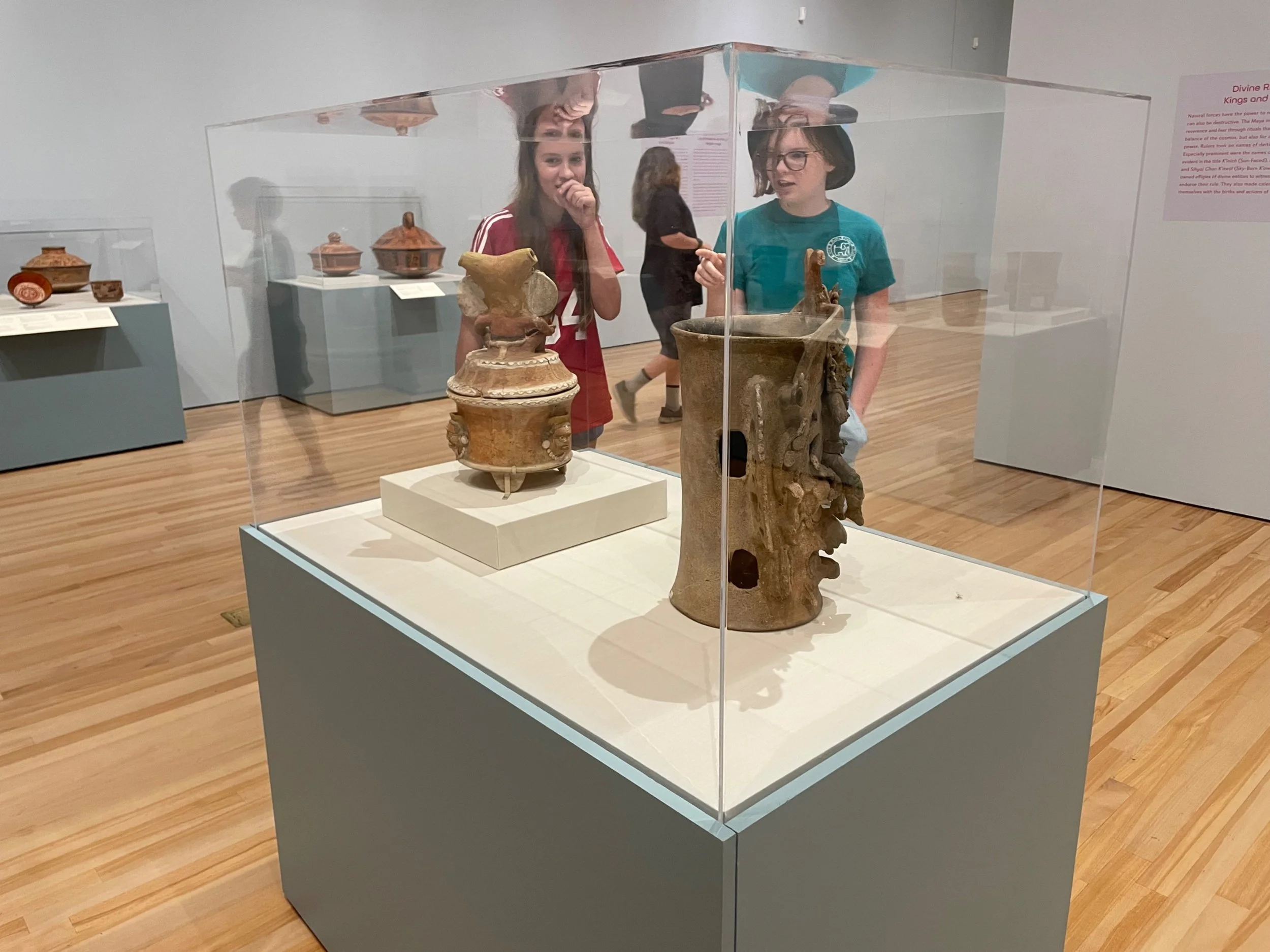
Field experiences are a cornerstone of our program, giving students the chance to step beyond the classroom and connect their studies to the world around them. We embrace place-based learning: learning about a place from the place itself.
Throughout the year, students take part in excursions to museums, businesses, and natural environments. These trips offer hands-on encounters with science, history, and culture, while also building independence and confidence in navigating the wider community.
Travel is especially powerful in adolescence. At this age, students are beginning to understand their place in society and are newly ready to grasp cultural differences, historical contexts, and perspectives beyond their own. Extended trips create opportunities for problem solving, safe discomfort, and stretching their wings in a supportive environment. These experiences build resilience, adaptability, and responsibility.
Each year also includes three four-night trips, each anchored by a central question that connects directly to our studies:
Fall: A rotating camping trip focused on science and history themes
Winter: Nature’s Classroom Institute (linked), a leadership and sustainability program with Montessori peers from across the state
Spring: A city trip immersing students in the civic, cultural, and ecological life of a major U.S. city
In addition, our annual weeklong staycation brings students into Austin itself, where they explore the city through rotating lenses of industry and expansion, natural history, and arts and culture.
By pulling directly from their surroundings, whether studying soil chemistry in the garden, biodiversity in the desert, or civil rights history in New Orleans, students see how academic concepts come alive in the real world. Field experiences show them that learning is not confined to the classroom, but is everywhere and in everything.
-
Our campus is a rare gift in the middle of Austin, with over seven acres of land that provide daily opportunities for students to learn, contribute, and connect with the natural world. Stewardship of this land is woven into our program. Students help care for the gardens and animals, join campus beautification projects, and take part in sustainability initiatives that evolve year by year.
With guidance from our expert gardener and grounds manager, Ms. Garden Stacy, students learn to improve soil health, attract diverse species such as butterflies, and adopt eco-friendly practices. They also engage in grant writing, scientific observation, and hands-on projects that connect classroom learning to living systems.
Through this work, students come to understand the true value of a loved piece of earth. When adolescents take part in caring for the land, they develop a sense of responsibility, belonging, and pride in their community. Many alumni return to campus and point out the trees they planted or the gardens they helped shape, remembering the tether they built to this place.
-
Each year, students take part in creating and maintaining our ever-evolving student-run business, the Trillium Legacy. Guided by their own ideas and interests, the business grows and adapts annually, offering a wealth of real-world learning opportunities.
Financial literacy is a crucial skill for emerging young adults as they prepare to navigate an ever-changing economic landscape. Through the business, students gain experience with budgeting, modern technology applications, web design, marketing, and customer service. They also practice collaboration, decision-making, and problem-solving in authentic contexts.
Funds from the business are reinvested based on student decisions, expanding future projects and supporting our spring trip. In this way, students see the direct impact of their work and develop both independence and a sense of shared responsibility.
-
Our units are organized around central concepts and guiding questions that highlight the natural connections between disciplines. Students see how discoveries in science can illuminate history, or how literature can sharpen their understanding of identity and society.
While traditional schooling often separates learning into bins, our approach emphasizes both clarity within each subject and the richness that comes from noticing the patterns that link them. This helps students dive deeper, uncovering connections and universal truths that make their studies more meaningful and memorable.
We meet all TEKS requirements and ensure students are prepared for high school, but we go beyond the surface. Because the curriculum tells a larger story and invites students to wrestle with essential questions, engagement is naturally more invigorating. Students see not just what they are learning, but why it matters.
When taught this way, adolescents’ heightened ability to make abstract connections is fully engaged. They learn how concepts build upon one another across disciplines, and how the ideas they study now can connect to future discoveries. This approach deepens both understanding and retention, giving students the tools to think critically and creatively about the world.
-
We are a village in a city. Our campus is home to students from infancy through 9th grade, all fully accredited by the American Montessori Society. This unique model creates a living, breathing community of learners across all stages of development, all sharing the same space.
Adolescents in our program are offered the opportunity to volunteer with younger classes. These experiences allow them to observe human development in action and to practice patience, leadership, and empathy. In supporting younger children, they gain perspective on their own growth while learning to balance responsibility with compassion.
Our classroom culture also emphasizes the skills that allow adolescents to thrive in groups. Students actively practice communication, collaboration, conflict resolution, and empathy, which enables them to build deep connections with their peers. The understanding and acceptance that grow from this work are at the heart of our community.
Beyond the classroom, our school is built on traditions and gatherings that bring students, families, and staff together. Events like Harvest Fest, Stone Soup, yoga weekends, and clothing swaps deepen bonds between students across levels and between families who become part of one another’s lives.
We believe parents are an essential part of this community. Through weekly newsletters, families receive conversation starters and snapshots of classroom life, helping them connect with their adolescent’s learning and engage in meaningful dialogue at home. These touchpoints ensure that families, students, and guides are woven together in partnership, creating the true village that supports every child.
-
Self-reflection is a cornerstone of adolescent development. Each week, students take time to journal in the same outdoor spot on campus, building a ritual of observation and awareness. They also reflect after projects, considering whether they reached their goals, what they learned through the process, and how they might approach challenges differently next time.
Through these practices, students begin to understand their inner world and how to express themselves within a group. Reflection helps them recognize their strengths, face struggles with honesty, and see mistakes as opportunities for growth. Over time, this builds resilience, self-awareness, and the confidence to contribute authentically to their community.
Our Vision for Our Students
The goals of our Secondary I Montessori Program are to help students develop:
A joyful relationship with learning, sparked by curiosity and discovery.
Growth grounded in brain science, informed by current understandings of adolescent development.
Real-World Preparedness, Readiness for the future, equipped with the academic and practical skills to thrive beyond middle school.
Adaptability, the ability to navigate an ever-changing world with resilience.
Confidence and agency, so they feel empowered to make choices and take responsibility.
Strength in constructive conflict, learning to build, repair, and maintain healthy relationships.
An integrated way of thinking, visualizing how disciplines connect and inform one another.
A safe space for self-discovery, where they can explore identity and grow into their authentic selves.
A celebration of diversity, honoring culture, thought, and different ways of being.
Partnership with families, connecting parents to their child’s learning journey.
Connection to the Wider World, a sense of connection to community and the wider world, with an understanding of how their choices make an impact.
Who is the Adolescent:

Photo Caption: Maria Montessori’s Bulb of Development
This graphic illustrates the four planes of development, showing how children grow through distinct stages from birth to young adulthood. Our adolescent program serves students in the third plane (ages 12–18), a time of rapid growth and transformation when young people are discovering their identity, independence, and place in society.
Who is the Adolescent?
In Montessori, we view the adolescent as a “social newborn.” Just as infants absorb their surroundings and begin to grasp the basic laws of the universe, adolescents are busy consolidating their understanding of the wider world. Their brains are making connections at the second fastest pace since infancy, preparing them to piece together how society works and where they belong within it.
This is a tender, transformative stage. Feelings are big, friendships and social worlds are all-encompassing, and sensitivities heighten. Yet woven into these growing pains is something extraordinary: the awakening of a human spirit. Adolescents begin to shape their values and practice defending them. They no longer accept simply checking boxes or completing the next task. Instead, they ask: Why? When will we use this? Why does it matter?
This questioning is not resistance but a yearning for deeper application and purposeful effort that leads to discovery, new understanding, or a tangible creation.
Suggested Texts
How to Talk so Teens will Listen and Listen so Teens will Talk
Last Child of the Woods
Montessori From Childhood to Adolescents- Appendices A, B, and C
Core Curriculum:
Our program follows the TEKS standards to ensure students are fully prepared for high school, while also diving deeper to make learning more meaningful. The curriculum is designed around a three-year cycle, giving students time to fully engage with different fields of science and history.
Rather than racing through content, students spend each year immersing themselves in a particular scope of study while returning to core fundamentals that connect across disciplines. Central concepts such as the laws of motion, fundamental forces, and diffusion are revisited through new applications and perspectives each cycle. This structure builds mastery through both depth and repetition, allowing students to see how ideas connect and evolve over time.
In addition to science and history, students strengthen their skills in mathematics and language arts, ensuring a balanced academic foundation. By weaving standards with deeper inquiry, our curriculum equips students not only with essential knowledge, but also with the ability to think critically about how concepts link together and apply to the world around them.
-
Math at Mariposa is self-paced, giving students the time and support they need to truly master concepts. We recognize that math can be challenging for many students, often because traditional classrooms move everyone forward at the same speed. Since math builds on itself, moving ahead without mastery can create gaps that grow into frustration and self-doubt.
In our program, no student is pushed ahead before they are ready, and no student is held back when they are eager for a challenge. Because math is self-paced, motivated students can progress as far as their curiosity and effort take them, while guides ensure that any gaps are identified and addressed along the way. This individualized approach builds confidence, resilience, and a healthy relationship with math.
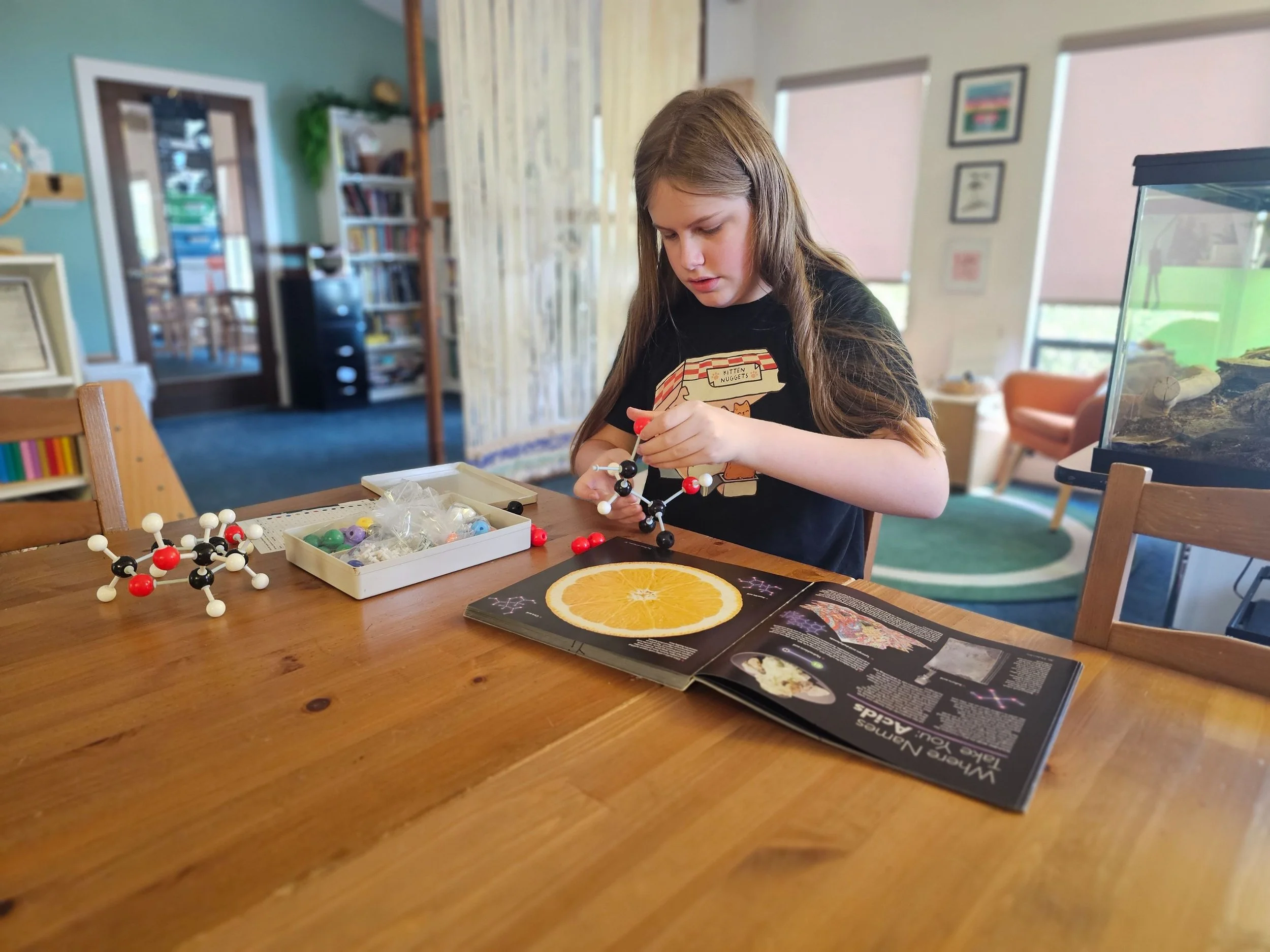
Our curriculum emphasizes not just computation, but also application and transference of concepts. Students participate in problem solving, investigations, and frequent math labs that connect directly to our science and history curriculum. By seeing math in action, students come to understand it as a powerful tool for exploring and making sense of the world.
-
Our three-year history cycle invites students to explore humanity’s story from multiple perspectives: U.S. History from its earliest inhabitants through the Civil War, Modern U.S. History from Reconstruction to the present day, and World History and Cultures. Each cycle is taught thematically, encouraging students to recognize patterns in human behavior, decisions, and communities across time and place. We also connect these global and national narratives to the creation and growth of our home state of Texas, helping students see how local history is intertwined with broader movements. This approach brings history to life, fostering curiosity, empathy, and a deeper understanding of how the past continues to shape our world today.
-
Our three-year science cycle engages students in Physics and Chemistry, Astronomy and Earth’s climate systems, and Biology with Anatomy and Physiology. At the heart of our program is a focus on fundamental scientific concepts and skills, principles like gravity, electromagnetism, and the forces that govern matter and energy. These ideas are revisited in each cycle from new perspectives, allowing students to see how the same natural laws shape everything from the structure of the universe to the workings of the human body. Along the way, students strengthen essential scientific practices, designing experiments, writing lab reports, and developing research essays, building both curiosity and confidence as they learn to think like scientists.
-
Language in our classroom is both communication and art. We model a love of reading alongside the craft of writing, guiding students through a wide range of genres, from poetry and persuasive essays to short stories, biographies, and research writing. Each piece goes through a process of drafting, editing, peer review, and refinement into portfolio-ready work, helping students develop confidence in their voice. Beyond writing, students engage in Socratic seminars, annotating and discussing texts to sharpen their critical thinking. Primary sources are woven into all subjects, and we are intentional in choosing diverse voices and perspectives, so students experience the power of language as a tool for understanding, empathy, and connection across cultures.
-
Students leave our program with a broad understanding of the world’s countries—not just their names on a map, but their cultures, landscapes, and the features that make each place unique. Geography and geology enrich every subject area: navigation in history, the chemical structure of minerals in chemistry, or the forces that shape rock and soil layers in physics and earth science. These connections even circle back to history, where geological knowledge helps us date ancient structures and artifacts. By weaving geography and geology throughout the curriculum, students see how the earth’s processes and human stories are deeply intertwined.